Fall 2026
SIGNATURE SEMINAR SERIES (12 WEEKS)
Maps, Masks, and Metamorphoses: The Shape of the Self in Transit
Dr. Roche
This fall course explores Shakespeare’s sustained fascination with movement—across spaces, cities, roles, and names—and the transformations such movement produces. In Shakespeare, the self is rarely fixed; it is shaped by travel and exile, by disguise and performance, by departure, loss, and return. Framed by questions of borders and belonging, the course examines how identity is negotiated through maps and masks, through speech acts and social roles, through journeys both outward and inward. The body becomes a vessel, the city a stage, and the road an initiatory path where selves are tested, fractured, and remade. Moving beyond illusion and authority (the focus of the spring series), this course asks what happens after stability collapses: when political, linguistic, or moral maps no longer hold. Drawing on philosophy, performance, and cultural history, we consider how Shakespeare anticipates modern questions of mobility and identity: Who belongs where? What defines the self in motion? And what happens when the coordinates of meaning dissolve?
Expanded Philosophical Focus:
Not only identity and illusion, but the movement of the self, across spaces, cities, roles, and names. The body as a vessel, the city as a stage, the road as an initiatory path. Language, masks, and travel all become means of philosophical and theatrical transformation.
Additional Philosophical Anchors:
- Plato (Cratylus, Theaetetus) – naming, perception, travel of the soul
- Ovid (Metamorphoses) – transformation as journey
- Montaigne – Essais as inner travelogue; “Que sais-je?”
- Pico della Mirandola – the self as migratory potential
- Ibn Battuta, Marco Polo, Mandeville (as intertexts or supplements)
- Italo Calvino (Invisible Cities) — for a modern poetic frame
- Foucault — cities of surveillance, identity, masks
Plays: Henry V, Pericles, and Cymbeline
📅 Dates: (12 weeks)
- September: 14, 21, 28
- October: 5, 12, 19, 26
- November: 2, 9, 16
(Recess: Thanksgiving week)
- November: 30
- December 7 (final session)
🕔 Schedule: Monday, 5:00 PM–6:30 PM
📍 Format: Hybrid (in-person & online)
💵 $250-$500 Sliding Scale
🏢Location:
Northampton Center for the Arts – Barn Door Gallery
33 Hawley Street, Northampton, MA 01060
Important Details:
- Please download the SLACK app to access reading materials and bringyour laptop.I am happy help set up SLACK during the first week of class.
- Extra readings will be posted on SLACK. Although not required, these materials will enhance our understanding of the context in which these plays were written.
- Windows download Mac download Linux download
~~~~~~~~~~~~~~~~~~~~~~~~~~~~~~~~~~~~~~~~~~~~~~
Guest Speaker
Ovid’s Metamorphoses and Shakespearean Romance:
Transforming Stories and Reshaping Selves in Cymbeline
Professor Lisa S. Starks
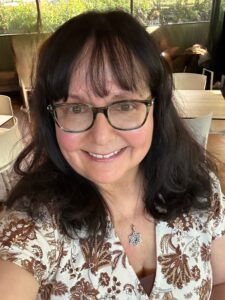 Lisa S. Starks is Professor of Literature at the University of South Florida, Associate Editor of The Shakespearean International Yearbook, and Undergraduate Program Coordinator, English, St. Petersburg campus. She specializes in Shakespeare, early modern drama, and adaptation studies. In these fields, her research examines intersections of Shakespeare with cinema, Jewish Shakespeares, Levinasian ethics, sexuality, violence, and trauma, as well as early modern theatre’s engagement with Ovid. Starks’s publications include Ovid and Adaptation in Early Modern English Theatre (Edinburgh UP, 2020), Violence, Trauma, and Virtus in Shakespeare’s Roman Poems and Plays (Palgrave, 2014), and two co-edited volumes on Shakespeare and film. She is currently completing a monograph, Levinas, Shakespeare, and Adaptation (Edinburgh UP), which explores how radical ethics can inform Shakespearean performance and pedagogy across media and cultures.
📅 Date: October 19th, 2026
🕔 Schedule: Monday, 5:00 PM–6:30 PM
📍 Format: Hybrid (in-person & online)
💵 Price: included in the semester registration. walk-ins: suggested donation $20
🏢Location: Northampton Center for the Arts – Barn Door Gallery
33 Hawley Street, Northampton, MA 01060
Website: nohoarts.org
4 WEEK SEMINAR
Lost In Translation: Cymbeline
Dr. Marie Roche. PhD
This four-week seminar explores Cymbeline through the lens of translation, treating translation not as a technical exercise, but as a way of thinking about language, identity, and misrecognition. Few Shakespeare plays are more concerned with misnaming, disguise, false signs, and delayed recognition—making Cymbeline a rich testing ground for translation as both practice and philosophy.
Working with selected passages rather than the entire play, we will examine how meaning shifts across languages, contexts, and bodies. Translation will be approached lightly and collaboratively: participants do not need to know another language, though those who do are welcome to draw on it. Short excerpts in French (and occasionally other languages) will be introduced to illuminate how words carry—and fail to carry—truth.
Rather than aiming at mastery, the seminar asks what happens when words fail, when names deceive, and when meaning must be reconstructed across distance. Translation becomes a way to see Shakespeare thinking through the instability of language itself.
No prior knowledge of translation required, but a command of the French language: college level.
Play: Cymbeline
📅 Dates: (4 weeks)
- November: 4, 11, 18
(Recess: Thanksgiving week)
- December 2nd
🕔 Schedule: Wednesdays, 2:00 PM–3:30 PM
📍 Format: online via Microsoft Teams
💵 $100 Standalone or Free if enrolled in the fall seminar
🏢Location: Online through Microsoft Teams
Important Details:
- Please download the SLACK app to access reading materials and bringyour laptop.I am happy help set up SLACK during the first week of class.
- Extra readings will be posted on SLACK. Although not required, these materials will enhance our understanding of the context in which these plays were written.
- Windows download Mac download Linux download

NOM (at the Northampton Center for the Arts):
Community Shakespeare of New England sincerely thanks Northampton Open Media for their generous support in providing the essential tools—free of charge—that make our hybrid format possible -Online through Microsoft Teams and in person.